Product Description
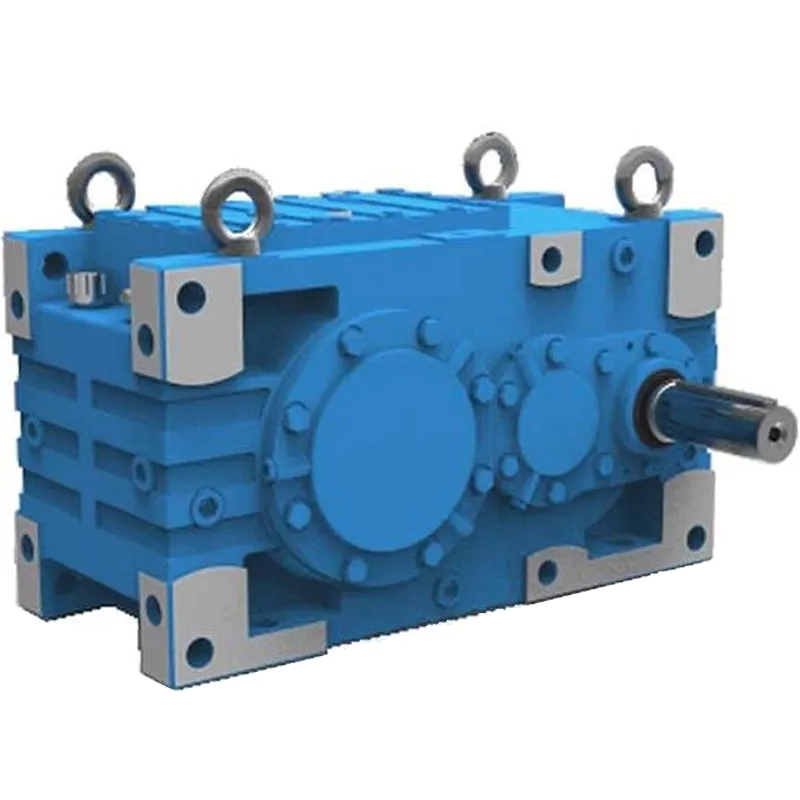
Cylindrical gear reducer (JB/T8853-2001) and bevel gear reducer (JB/T9002-1999) is XIHU (WEST LAKE) DIS.ANG the 2 series of hard tooth surface gear products, tooth surface with low carbon alloy steel hardening, grinding, has a large carrying capacity, high transmission efficiency, reliable operation, long service life, etc. Be applicable to the metallurgical, mining, transport, cement, construction, chemical industry, textile, light industry, etc.
Working conditions shall meet the following requirements:
- highest input shaft speed is not more than 1500 RPM.
- the gear meshing linear speed is not more than 25 m/s;
- working environment temperature was minus 40 ~ 50 ºC.When working environment temperature is lower than 0 ºC, before the start of lubricating oil must be heated to 0 ºC and above. When the working environment temperature is higher than 45 ºC, heat insulation and cooling measures must be taken.
Model: ZSY280
Ratio: 7.6~67
Input speed(rpm): 750, 1000, 1500(could be changed according to customer)
Center distance(mm): 280
| Application: | Machinery |
|---|---|
| Hardness: | Hardened Tooth Surface |
| Installation: | Horizontal Type |
| Gear Shape: | Cylindrical Gear |
| Step: | Three-Step |
| Type: | Gear Reducer |
| Customization: |
Available
| Customized Request |
|---|
Can you explain the different types of gear reducers available in the market?
There are several types of gear reducers commonly used in industrial applications:
1. Spur Gear Reducers: These reducers have straight teeth and are cost-effective for applications requiring moderate torque and speed reduction. They are efficient but may produce more noise compared to other types.
2. Helical Gear Reducers: Helical gears have angled teeth, which provide smoother and quieter operation compared to spur gears. They offer higher torque capacities and are suitable for heavy-duty applications.
3. Bevel Gear Reducers: Bevel gears have conical shapes and intersect at an angle, allowing them to transmit power between non-parallel shafts. They are commonly used in applications where shafts intersect at 90 degrees.
4. Worm Gear Reducers: Worm gears consist of a worm (screw) and a mating gear (worm wheel). They offer high torque reduction and are used for applications 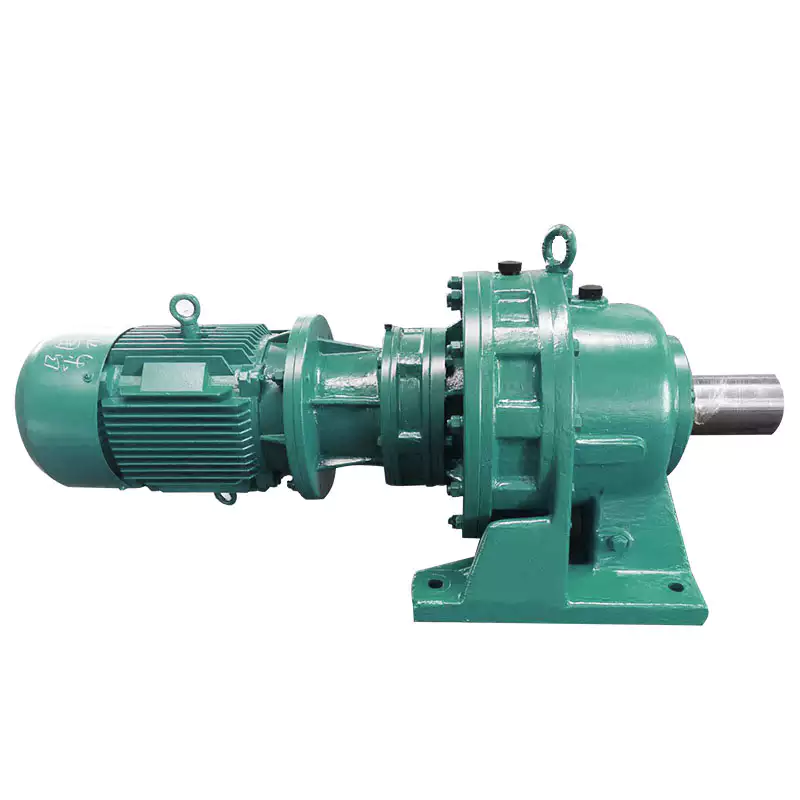
What role do gear ratios play in optimizing the performance of gear reducers?
Gear ratios play a crucial role in optimizing the performance of gear reducers by determining the relationship between input and output speeds and torques. A gear ratio is the ratio of the number of teeth between two meshing gears, and it directly influences the mechanical advantage and efficiency of the gear reducer.
1. Speed and Torque Conversion: Gear ratios allow gear reducers to convert rotational speed and torque according to the needs of a specific application. By selecting appropriate gear ratios, gear reducers can either reduce speed while increasing torque (speed reduction) or increase speed while decreasing torque (speed increase).
2. Mechanical Advantage: Gear reducers leverage gear ratios to provide mechanical advantage. In speed reduction configurations, a higher gear ratio results in a greater mechanical advantage, allowing the output shaft to deliver higher torque at a lower speed. This is beneficial for applications requiring increased force or torque, such as heavy machinery or conveyor systems.
3. Efficiency: Optimal gear ratios contribute to higher efficiency in gear reducers. By distributing the load across multiple gear teeth, gear reducers with suitable gear ratios minimize stress and wear on individual gear teeth, leading to improved overall efficiency and prolonged lifespan.
4. Speed Matching: Gear ratios
How do manufacturers ensure the precision of gear tooth profiles in gear reducers?
Manufacturers employ several techniques to ensure the precision of gear tooth profiles in gear reducers, which is crucial for optimal performance and efficiency:
1. Precision Machining: Gear teeth are typically machined using advanced CNC (Computer Numerical Control) machines that can achieve high levels of accuracy and repeatability. This ensures consistent gear tooth profiles across multiple components.
2. Quality Control Measures: Rigorous quality control processes, such as dimensional inspections and profile measurements, are performed at various stages of manufacturing to verify that gear tooth profiles meet the required specifications.
3. Tooth Profile Design: Engineers use specialized software and simulation tools to design gear tooth profiles with precise involute shapes and accurate dimensions. These designs are then translated into machine instructions for manufacturing.
4. Material Selection: High-quality materials with excellent wear resistance and dimensional stability are chosen to minimize the potential for deformation or inaccuracies during machining and operation.
5. Heat Treatment: Heat treatment processes, such as carburizing and quenching, are applied to enhance the surface hardness and durability of gear teeth, reducing the risk of wear and deformation over time.
6. Tooth Grinding and Finishing: After initial machining, gear teeth often undergo precision grinding and finishing processes to achieve the desired tooth profile accuracy and surface finish.
7. Post-Processing Inspection: Gear tooth profiles are inspected again after manufacturing processes to verify that the final components meet the specified tolerances and performance criteria.
8. Computer-Aided Manufacturing (CAM): CAM software is used to generate tool paths and machining instructions, enabling precise control over tool movements and material removal during gear manufacturing.
By combining these techniques and leveraging advanced manufacturing technologies, manufacturers can achieve the necessary precision in gear tooth profiles, resulting in reliable and efficient gear reducers for various industrial applications.
enable gear reducers to match the rotational speeds of input and output shafts. This is crucial in applications where precise speed synchronization is required, such as in conveyors, robotics, and manufacturing processes.
When selecting gear ratios for a gear reducer, it’s important to consider the specific requirements of the application, including desired speed, torque, efficiency, and mechanical advantage. Properly chosen gear ratios enhance the overall performance and reliability of gear reducers in a wide range of industrial and mechanical systems.
requiring high ratios, although they can be less efficient.
5. Planetary Gear Reducers: These reducers use a system of planetary gears to achieve high torque output in a compact design. They provide excellent torque multiplication and are commonly used in robotics and automation.
6. Cycloidal Gear Reducers: Cycloidal drives use an eccentric cam to achieve speed reduction. They offer high shock load resistance and are suitable for applications with frequent starting and stopping.
7. Harmonic Drive Reducers: Harmonic drives use a flexible spline to achieve high gear reduction ratios. They provide high precision and are commonly used in applications requiring accurate positioning.
8. Hypoid Gear Reducers: Hypoid gears have helical teeth and non-intersecting shafts, making them suitable for applications with space limitations. They offer high torque and efficiency.
Each type of gear reducer has its own advantages and limitations, and the choice depends on factors such as torque requirements, speed ratios, noise levels, space constraints, and application-specific needs.


editor by CX 2023-08-17
China Custom Gft 28 T3 9006 I=64, 3 Kdn-K, R916218116 for CZPT 3412 Drum Drive Gear near me manufacturer
Product Description
Gft 28 T3 9006 I=64, 3 Kdn-K, R916218116 For CZPT 3412 Drum drive Gear
CA 15 CA 121 CA 134 CA 152 CA 252 CA 280 CA 301 CA 302 CA 305 CA 600 CA 602 CA 612. CC. CC 722. HAMM · 3414 DV H-series. 3414 P Soil compactor with padfoot drum drive gear reducer ,bearing ,seal, ring.
Uchida CZPT A8V107 A8VO107 Main Hydraulic Pump CZPT Piston Pump for Jcb CZPT road roller gearbox, reducer,GFT28 GFT34
Rexroth Piston Motors Parts CZPT A2FM28/61-VAB571 A2FM45/61W-VZB571 hydraulic motor
A10VO28DR/31R-PSC12K01 Germany CZPT orginal Hydraulic pump
A11vlo75 A11vlo95 A11vlo145 A11vlo190 A11vlo260
Rexroth A10VO28 Axial Variable Piston Pump A10VO28DR/31R-PSC12K01 A10VO28
Rexroth plunger pump is widely used in high pressure, large flow, high power system and flow need adjustment occasions, such as planing machine, broaching machine, hydraulic press, engineering machinery such as widely used.
1. Product: Excavator hydraulic parts
2. Standard: Original and OEM
3. Certification: ISO9001
Rexroth Piston Motors Parts A2fm90, A2fm125, A2fm107
A10VO28DR/31R-PSC12K01
We could supply the CZPT hydraulic pump and motor, also the inner spare parts as below model:
Rexroth Piston Motors Parts A2fm90, A2fm125, A2fm107
|
Product Name
|
Excavator hydraulic parts
|
|
Model
|
Excavator hydraulic parts
|
|
Parts number
|
90R55 90R75 90R100 90R130 90R250
|
|
Condition:
|
100% new
|
|
Warranty
|
3months
|
|
Availability:
|
stock
|
|
MOQ(Minimum Order Quantity:)
|
1PCS
|
|
Seaport
|
Shanghai or Ningbo or Xiamen
|
|
Delivery Methods:
|
Express: DHL Fedex EMS UPS or By Air/ Sea
|
|
Payment Methods:
|
Trade assuranse,Bank transfer, Western Union, Money Gram, Credit Card,Paypal
|
###
| Other Brand Pump Parts | Model |
| Linde | BPR105/140/186/260;BPV35/50/70/100/200;B2PV35/50/75/105;H3.0/H4.5 travel |
| Linde | HPR75/90/100/130/160;BMV50/55/75/105;BMF35/75/105/140/186/260;MPF55, MPR63 |
| Hitachi | HPV091/102/105/116/130/135/145 |
| Kawasaki | K3V45/63/112/140/180/280; K5V80/140/200 |
| Kawasaki | K3SP36; K3SP30 ; KVC925/930/932; DNB08; NVK45DT; SBS120/140 |
| HAMM ROLLER 3414 | PC50/60/100/120/150/200/220/300/400(-1/2/3/4/5/6/7)/650;PC45R-8swing motor |
| Rexroth | A10V(S)O10/16/18/28/45/63/71/85/100/140 (H & E first products) |
| Rexroth | A2F10/12/23/28/45/55/63/80/107/125/160/200/225/250/355/500/915/1000; (A2VK…) |
| Rexroth | A2FO10/12/16/23/28/32/45/56/63/80/90/107/125/160/180/250/355/500 |
| Rexroth | A2FE28/32/45/56/63/80/90/107/125/160/180/250/355 |
| Rexroth | A4V(SO)40/45/50/56/71/90/125/180/250/355/500 |
| Rexroth | A4VG25/28/40/45/50/56/71/90/125/140/180/250 |
| Rexroth | A6V(M)28/55/80/107/140/160/200/250/355/500 |
| Rexroth | A7V(O)28/55/80/107/140/160/200/250/355/500/1000 |
| Rexroth | A8V(O)28/55/80/107/140/160/200/250/355/500 |
| Rexroth | A10VGO28/45/63 |
| Rexroth | A11V(L)O50/60/75/95/130/145/160/190/250/260 |
|
Product Name
|
Excavator hydraulic parts
|
|
Model
|
Excavator hydraulic parts
|
|
Parts number
|
90R55 90R75 90R100 90R130 90R250
|
|
Condition:
|
100% new
|
|
Warranty
|
3months
|
|
Availability:
|
stock
|
|
MOQ(Minimum Order Quantity:)
|
1PCS
|
|
Seaport
|
Shanghai or Ningbo or Xiamen
|
|
Delivery Methods:
|
Express: DHL Fedex EMS UPS or By Air/ Sea
|
|
Payment Methods:
|
Trade assuranse,Bank transfer, Western Union, Money Gram, Credit Card,Paypal
|
###
| Other Brand Pump Parts | Model |
| Linde | BPR105/140/186/260;BPV35/50/70/100/200;B2PV35/50/75/105;H3.0/H4.5 travel |
| Linde | HPR75/90/100/130/160;BMV50/55/75/105;BMF35/75/105/140/186/260;MPF55, MPR63 |
| Hitachi | HPV091/102/105/116/130/135/145 |
| Kawasaki | K3V45/63/112/140/180/280; K5V80/140/200 |
| Kawasaki | K3SP36; K3SP30 ; KVC925/930/932; DNB08; NVK45DT; SBS120/140 |
| HAMM ROLLER 3414 | PC50/60/100/120/150/200/220/300/400(-1/2/3/4/5/6/7)/650;PC45R-8swing motor |
| Rexroth | A10V(S)O10/16/18/28/45/63/71/85/100/140 (H & E first products) |
| Rexroth | A2F10/12/23/28/45/55/63/80/107/125/160/200/225/250/355/500/915/1000; (A2VK…) |
| Rexroth | A2FO10/12/16/23/28/32/45/56/63/80/90/107/125/160/180/250/355/500 |
| Rexroth | A2FE28/32/45/56/63/80/90/107/125/160/180/250/355 |
| Rexroth | A4V(SO)40/45/50/56/71/90/125/180/250/355/500 |
| Rexroth | A4VG25/28/40/45/50/56/71/90/125/140/180/250 |
| Rexroth | A6V(M)28/55/80/107/140/160/200/250/355/500 |
| Rexroth | A7V(O)28/55/80/107/140/160/200/250/355/500/1000 |
| Rexroth | A8V(O)28/55/80/107/140/160/200/250/355/500 |
| Rexroth | A10VGO28/45/63 |
| Rexroth | A11V(L)O50/60/75/95/130/145/160/190/250/260 |
Helical, Straight-Cut, and Spiral-Bevel Gears
If you are planning to use bevel gears in your machine, you need to understand the differences between Helical, Straight-cut, and Spiral bevel gears. This article will introduce you to these gears, as well as their applications. The article will also discuss the benefits and disadvantages of each type of bevel gear. Once you know the differences, you can choose the right gear for your machine. It is easy to learn about spiral bevel gears.
Spiral bevel gear
Spiral bevel gears play a critical role in the aeronautical transmission system. Their failure can cause devastating accidents. Therefore, accurate detection and fault analysis are necessary for maximizing gear system efficiency. This article will discuss the role of computer aided tooth contact analysis in fault detection and meshing pinion position errors. You can use this method to detect problems in spiral bevel gears. Further, you will learn about its application in other transmission systems.
Spiral bevel gears are designed to mesh the gear teeth more slowly and appropriately. Compared to straight bevel gears, spiral bevel gears are less expensive to manufacture with CNC machining. Spiral bevel gears have a wide range of applications and can even be used to reduce the size of drive shafts and bearings. There are many advantages to spiral bevel gears, but most of them are low-cost.
This type of bevel gear has three basic elements: the pinion-gear pair, the load machine, and the output shaft. Each of these is in torsion. Torsional stiffness accounts for the elasticity of the system. Spiral bevel gears are ideal for applications requiring tight backlash monitoring and high-speed operations. CZPT precision machining and adjustable locknuts reduce backlash and allow for precise adjustments. This reduces maintenance and maximizes drive lifespan.
Spiral bevel gears are useful for both high-speed and low-speed applications. High-speed applications require spiral bevel gears for maximum efficiency and speed. They are also ideal for high-speed and high torque, as they can reduce rpm without affecting the vehicle’s speed. They are also great for transferring power between two shafts. Spiral bevel gears are widely used in automotive gears, construction equipment, and a variety of industrial applications.
Hypoid bevel gear
The Hypoid bevel gear is similar to the spiral bevel gear but differs in the shape of the teeth and pinion. The smallest ratio would result in the lowest gear reduction. A Hypoid bevel gear is very durable and efficient. It can be used in confined spaces and weighs less than an equivalent cylindrical gear. It is also a popular choice for high-torque applications. The Hypoid bevel gear is a good choice for applications requiring a high level of speed and torque.
The Hypoid bevel gear has multiple teeth that mesh with each other at the same time. Because of this, the gear transmits torque with very little noise. This allows it to transfer a higher torque with less noise. However, it must be noted that a Hypoid bevel gear is usually more expensive than a spiral bevel gear. The cost of a Hypoid bevel gear is higher, but its benefits make it a popular choice for some applications.
A Hypoid bevel gear can be made of several types. They may differ in the number of teeth and their spiral angles. In general, the smaller hypoid gear has a larger pinion than its counterpart. This means that the hypoid gear is more efficient and stronger than its bevel cousin. It can even be nearly silent if it is well lubricated. Once you’ve made the decision to get a Hypoid bevel gear, be sure to read up on its benefits.
Another common application for a Hypoid bevel gear is in automobiles. These gears are commonly used in the differential in automobiles and trucks. The torque transfer characteristics of the Hypoid gear system make it an excellent choice for many applications. In addition to maximizing efficiency, Hypoid gears also provide smoothness and efficiency. While some people may argue that a spiral bevel gear set is better, this is not an ideal solution for most automobile assemblies.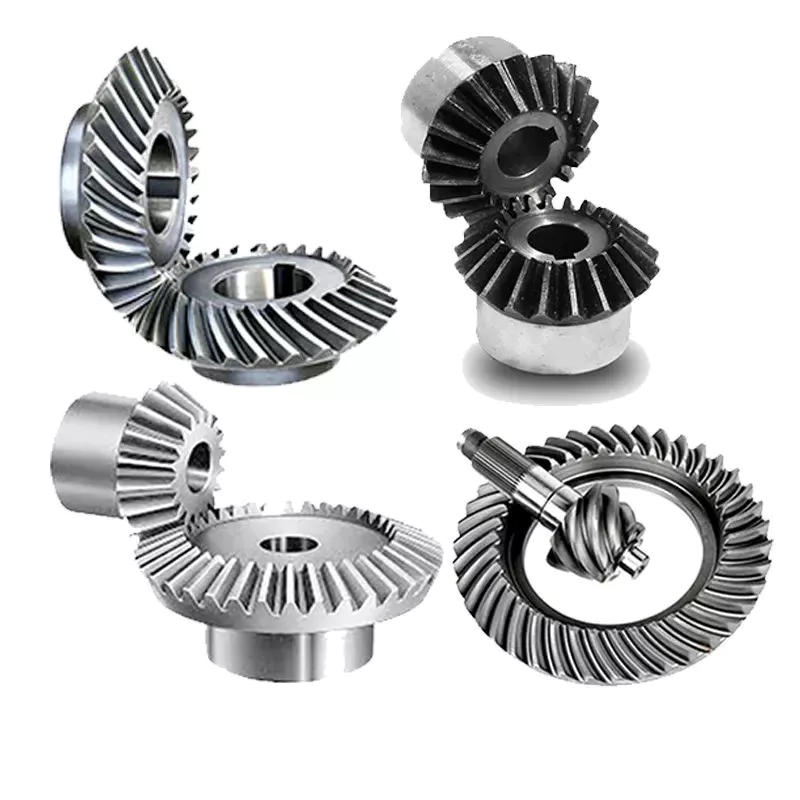
Helical bevel gear
Compared to helical worm gears, helical bevel gears have a small, compact housing and are structurally optimized. They can be mounted in various ways and feature double chamber shaft seals. In addition, the diameter of the shaft and flange of a helical bevel gear is comparable to that of a worm gear. The gear box of a helical bevel gear unit can be as small as 1.6 inches, or as large as eight cubic feet.
The main characteristic of helical bevel gears is that the teeth on the driver gear are twisted to the left and the helical arc gears have a similar design. In addition to the backlash, the teeth of bevel gears are twisted in a clockwise and counterclockwise direction, depending on the number of helical bevels in the bevel. It is important to note that the tooth contact of a helical bevel gear will be reduced by about ten to twenty percent if there is no offset between the two gears.
In order to create a helical bevel gear, you need to first define the gear and shaft geometry. Once the geometry has been defined, you can proceed to add bosses and perforations. Then, specify the X-Y plane for both the gear and the shaft. Then, the cross section of the gear will be the basis for the solid created after revolution around the X-axis. This way, you can make sure that your gear will be compatible with the pinion.
The development of CNC machines and additive manufacturing processes has greatly simplified the manufacturing process for helical bevel gears. Today, it is possible to design an unlimited number of bevel gear geometry using high-tech machinery. By utilizing the kinematics of a CNC machine center, you can create an unlimited number of gears with the perfect geometry. In the process, you can make both helical bevel gears and spiral bevel gears.
Straight-cut bevel gear
A straight-cut bevel gear is the easiest to manufacture. The first method of manufacturing a straight bevel gear was to use a planer with an indexing head. Later, more efficient methods of manufacturing straight bevel gears were introduced, such as the Revacycle system and the Coniflex system. The latter method is used by CZPT. Here are some of the main benefits of using a straight-cut bevel gear.
A straight-cut bevel gear is defined by its teeth that intersect at the axis of the gear when extended. Straight-cut bevel gears are usually tapered in thickness, with the outer part being larger than the inner portion. Straight-cut bevel gears exhibit instantaneous lines of contact, and are best suited for low-speed, static-load applications. A common application for straight-cut bevel gears is in the differential systems of automobiles.
After being machined, straight-cut bevel gears undergo heat treatment. Case carburizing produces gears with surfaces of 60-63 Rc. Using this method, the pinion is 3 Rc harder than the gear to equalize wear. Flare hardening, flame hardening, and induction hardening methods are rarely used. Finish machining includes turning the outer and inner diameters and special machining processes.
The teeth of a straight-cut bevel gear experience impact and shock loading. Because the teeth of both gears come into contact abruptly, this leads to excessive noise and vibration. The latter limits the speed and power transmission capacity of the gear. On the other hand, a spiral-cut bevel gear experiences gradual but less-destructive loading. It can be used for high-speed applications, but it should be noted that a spiral-cut bevel gear is more complicated to manufacture.
Spur-cut bevel gear
CZPT stocks bevel gears in spiral and straight tooth configurations, in a range of ratios from 1.5 to five. They are also highly remachinable except for the teeth. Spiral bevel gears have a low helix angle and excellent precision properties. CZPT stock bevel gears are manufactured using state-of-the-art technologies and know-how. Compared with spur-cut gears, these have a longer life span.
To determine the strength and durability of a spur-cut bevel gear, you can calculate its MA (mechanical advantage), surface durability (SD), and tooth number (Nb). These values will vary depending on the design and application environment. You can consult the corresponding guides, white papers, and technical specifications to find the best gear for your needs. In addition, CZPT offers a Supplier Discovery Platform that allows you to discover more than 500,000 suppliers.
Another type of spur gear is the double helical gear. It has both left-hand and right-hand helical teeth. This design balances thrust forces and provides extra gear shear area. Helical gears, on the other hand, feature spiral-cut teeth. While both types of gears may generate significant noise and vibration, helical gears are more efficient for high-speed applications. Spur-cut bevel gears may also cause similar effects.
In addition to diametral pitch, the addendum and dedendum have other important properties. The dedendum is the depth of the teeth below the pitch circle. This diameter is the key to determining the center distance between two spur gears. The radius of each pitch circle is equal to the entire depth of the spur gear. Spur gears often use the addendum and dedendum angles to describe the teeth.

